

GTIN stands for Global Trade Item Number, and describes a family of GS1 (EAN.UCC) global data structures that employ 14 digits and can be encoded into various types of data carriers. Currently, GTIN (Global Trade Item Number) is primarily used within barcodes, but it can also be used in other data carriers such as radio frequency identification (RFID) and future GS1 Digital Link QR Codes. The GTIN is only an umbrella term to describe varying types of GS1 numbering strings. For North American companies, the UPC is an existing form of the GTIN. To obtain authentic GS1 licensed UPC barcodes, please visit www.barcode-us.com.
GTIN Data Structures

GTIN-12 (UPC-12)
The 12-digit number used primarily in North America. The UPC-A barcode is the common symbol used to encode GTIN-12.
GTIN-8 (EAN/UCC-8)
An 8-digit number used predominately outside of North America.
GTIN-13 (EAN/UCC-13)
A 13-digit number used predominately outside of North America.
GTIN-14 (EAN/UCC-14 or ITF-14)
A 14-digit number used to identify trade items at various packaging levels
The Barcode Languages Used To Encode GTINs
The term, symbology, is used to describe a barcode language. Today, six symbologies support GTIN data structures: UPC; EAN; ITF-14; GS1-128; and GS1 Databar, and GS1 QR Code. Of these, ITF-14, GS1-128, and GS1 Databar employ 14-digit data structures of which the first character is a packaging level indicator (i.e., item or case). Both UPC and EAN have an implied packaging level of a single item. Therefore, these symbologies support the GTIN data structure without changing the number of encoded data characters.
The table below further illustrates the relationship between GTIN, legacy terminology, symbologies and use at point of sale (POS). In most cases, the legacy terminology and the symbology are called by the same name. GTIN changes this by separating the name of the data structure from the data carrier or, in this case, the symbology. A GTIN is the master key for physical and digital commerce success.
| GTIN Data Structure | Primary Use | Legacy Terminology | Symbology | Use at POS |
|---|---|---|---|---|
| GTIN-12 | Retail Products | UPC, UCC-12 | UPC-A, UPC-E | Yes |
| GTIN-13 | Retail Products | EAN, JAN, EAN-13 | EAN-13 | Yes |
| GTIN-8 | Small items (e.g., gum) | EAN-8 | EAN-8 | Yes |
| GTIN-14 | Fresh Produce/Meat/Dairy | EAN / UCC-14 | GS1 Databar Family | Yes |
| GTIN-14 | Cases/Pallets | ITF-14, SCC-14, UPC Case Code | ITF-14 | Not Yet |
Barcode Encodation of GTIN Data Structures
The GTIN is a globally unique 14-digit number used to identify trade items, products, or services. The full 14-digit GTIN is achieved on a data carrier of shorter length by ‘padding’ the number with left-justified zeros out to 14 digits.
The illustration to the right displays how each of the GTIN data formats is encoded within common barcodes.

The Evolution of GTINs
In the early 2000s retailers had to make adjustments to their original database structures to accept GTINs with the full 14-digit data string. This was at the same time that the Uniform Code Council (UCC) merged with global EAN offices to create GS1 Global. Since the original UPC-A was only 12-digits, this resulted in a massive undertaking but opened the door for GTIN data structures to be globally accepted.

Nothing really changed in terms of the barcodes that were to be used. The UPC did not go away; GTIN is a term referring to how the data is stored, i.e., padding the item number with zeroes to a uniform length. Most scanners in use will already scan any bar code within the GTIN family. The storage of the numbers is the issue being addressed. Many larger retailers and marketplaces, such as Amazon, now use the term GTIN within their supplier requirements.

Since the inception of bar codes with the UPC more than 50 years ago, hundreds of thousands of possible number combinations have been issued as manufacturer or company prefixes. GS1 has continually changed the standards of the issuing numbers, since GS1 standards are being adopted by other industries. Due to the limitations of early technology/programming, a 2005 sunrise date was established in the early 2000’s to prepare retailers and manufacturers for the changes.
Please click here to learn about the Sunrise 2005 initiative
Using GTINs in Practice
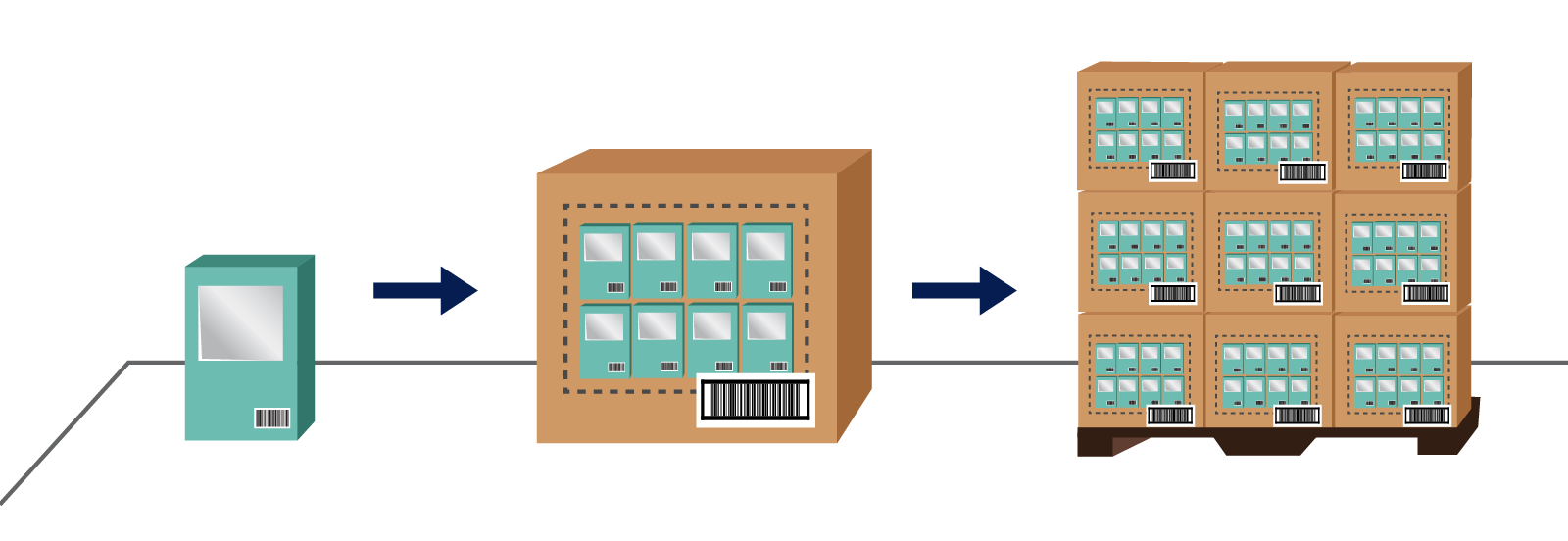
A Global Trade Item Number (GTIN) is used by a company to identify all of its trade items uniquely. The global standards organization (GS1) defines trade items as products or services that are priced, ordered or invoiced at any point in the supply chain. A GTIN identifies different types of products at any packaging level (i.e. consumer unit, inner pack, case, pallet). The global GS1 standards are robust and enable additional characteristics, such as production batches, to be added to GTINs for traceability initiatives.
In the US, a GTIN is normally synonymous with a UPC. The 12-digits encoded within the UPC barcode are referred to the as Global Trade Item Number (GTIN).
The GTIN-12 is commonly on an individual product that will be scanned at retail.

The Importance of Authentic GTINs

The Global Trade Item Number (GTIN) is an essential identification key corresponding to rich detailed product information for a product or package level. For example, when scanned at a point-of-sale checkout, the 12-dgiit UPC GTIN corresponds to a product residing on a retailer’s database. The product information is not stored within the barcode symbol; rather, the 12-digit “identification key” points to the product data.
GTIN VALIDATION TOOLS
Retailers and marketplaces, such as Amazon, rely on GTIN validation tools to authenticate a GTIN and the associated brand ownership. The GTIN.cloud tool not only conveys brand-controlled product data, but also includes a company’s current GS1 Certificate enabling transparency to UPC/GTIN ownership. The Verified by GS1 tool also provides a simple brand association against the global standards databases.

How To Get Global Trade Item Numbers (GTINs)

Trading partners require suppliers to provide UPC barcodes uniquely licensed to their brand. As the authority on UPC implementation and the global barcode provider, Barcode US the ONLY source to obtain UPC barcodes (.eps) with personal support. Whereas GS1 is the global standards organization that administers guidelines and Company Prefix assignments, Barcode US provides the actual barcode images and GTIN assignment support necessary to correctly implement UPC barcodes.
Resources
- Get GTINs and Barcodes
- GS1 General Specifications
- GTIN Management Standard
- Check Digit Calculator
- GTIN.cloud Repository
- Fresh Food and Upstream GTIN Allocation Rules
- GS1 AIDC Fresh Foods Sold at Point-of-Sale Implementation Guideline
- GS1 AIDC Healthcare Guideline
- GTIN Management Guideline for Construction Products
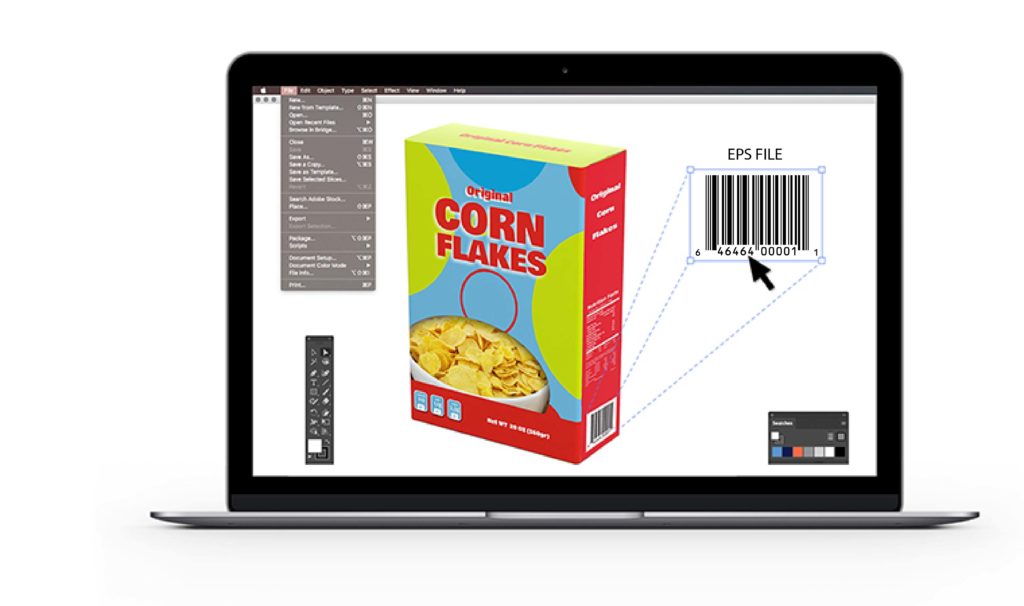
Create Print-Ready Digital .EPS Barcode Files 24/7
A crucial component of precise digital barcode artwork is “bar width adjustment” (BWA), which compensates for gain/reduction occurring in the printing processes. A barcode image file which does not account for BWA will not print accurately for most print technologies. CreateBarcodes.com is the only GS1 Certified solution to create print-ready digital barcode images.


GTINs: Boosting Your Online Presence
GTINs significantly boost product discoverability across Google Shopping, Amazon, and other platforms as a universal identifier. GTINs help search engines better understand, index, and display your products in relevant search results.
For e-commerce, sellers are required to include GTINs in product feeds to avoid listing rejections and maximize visibility.
How To Get Barcodes
- Estimate How Many Barcodes
- Apply at BARCODE US To Establish GTIN.cloud® account
- License UPC Company Prefix/GTINs
- Assign UPC/GTINS and Create Barcodes on GTIN.cloud®
Important Points
GTINs and Barcodes Are Not The Same
A GTIN is the actual identifier. The barcode symbol is a data carrier.
GTINs Cannot Ever Be Reused
GS1 global standards mandates that GTINs should not ever be reused.
Each Product Variant Needs a Unique GTIN
Identify your products as you would like retailers to order your products.
Use Company Licensed GTINs
Global retailers and Amazon require GS1 licensed Company Prefixes and GTINs.
Common GTIN Questions
GTIN is the acronym for “Global Trade Item Number” and the term is used by the GS1 standards to identify individual items and levels of packaging. A GTIN is a number that is used to identify “something” that can be purchased, sold, or put into inventory. This includes individual items that can be purchased by a consumer as well as cases of items that could be purchased by a retailer and moved within their supply chain. In short, a GTIN is an umbrella term used to refer to items and cases that may need to be identified with a GTIN barcode, such as a UPC barcode.
Up until June 2005, there were related but disconnected country-based standard-numbering organizations. In the United States, a standards organization called the Uniform Code Council (UCC) administered the guidelines and licensing for 12-digit UPC barcodes. Non-US countries had individual organizations called European Article Number (EAN) offices, which handled identification standards for EAN-8 and EAN-13 barcodes.
Global manufacturers and international retailers were challenged by the varying lengths of the identifiers and minor localized differences in standards verbiage. Consequently, the UCC and EAN offices merged into a single global standards entity called GS1 and each country has a local GS1 office (ie. GS1 US).
Because UPCs and EAN were essentially not changing, they created the term GTIN to represent the GS1 standardized item identifier. One of the major hurdles accomplished with the global merge was the reprogramming of point-of-sale scanners in the US. Although 12-digit UPCs (Universal Product Codes) were scannable worldwide, the 13-digit EAN could not fit into the database structures programmed in the US scanning environments. To prepare for the merger and introduction of GTINs, the Sunrise 2005 initiative was established to help set a timeline.
A UPC is a form of GTIN. The GTIN data structure is 14 digits. In databases, two zeros (00) preceded the 12-digit data of a UPC to fill the GTIN data requirements. Real-world example: When a vendor is setting up their product information on Amazon or Google Merchant Center, there is a field for a product’s unique GTIN. Companies in the US would normally use their 12-digit UPC. If your company does not yet have UPC barcodes, please call us at 888-540-6885 or visit GS1 Barcode Service.
UPC (GTIN) identification is used by a variety of industries and in some cases there may be minor alterations and requirements associated with barcode marking. For example, certain states have specific requirements for expanded product data for CBD products.
GS1 is the global standards body for item identification. Each country has its own local office that administers the licensing of Company Prefixes and GTINs. In the US, the local GS1 office is called GS1 US. Even though GS1 US is technically a monopoly, the GS1 system does provide trading partners the assurance of globally unique item identifiers. It is for this reason that retailers and marketplaces, such as Amazon, require suppliers to obtain GS1 UPC barcodes.
This is commonly done to correct typographical errors and strategy changes. The Brand Name can be changed for a “In Use” product. Based on the impact of the change for your trading partners, you may want to consider issuing a new GTIN. Please note that the trade item will use up an available GTIN.
No. GS1 US only provides the identifiers (GTINs to build the numeric Universal Product Code. Unfortunately, many new companies incorrectly associate a barcode with a UPC, so the GS1 sites use ‘Apply for Barcode” and this often causes confusion. 
The first digit of a GTIN-14 is called an “indicator digit” and is only found in case identification. If another case that contains the same trade item is created, the new GTIN-14 will start with an indicator digit of “2” and so on. GTIN-14s can have indicator digits up to the “8”.
Aside from assigning company prefixes, the GS1 creates the global standards for item and logistical barcoding. The GS1 General Specification covers all the rules for allocating numbers. As of January 2019, GS1 guidelines do not allow for UPC (GTIN) reuse. Click Here To Learn More.

GTIN FAQ’s

ITF-14 Barcodes

Check Digit Calculator
We Are Here To Help!
Please contact us at 888.540.6885 or chat with us online If you would like to set up a call with a consultant for assistance, please use the button below.
